
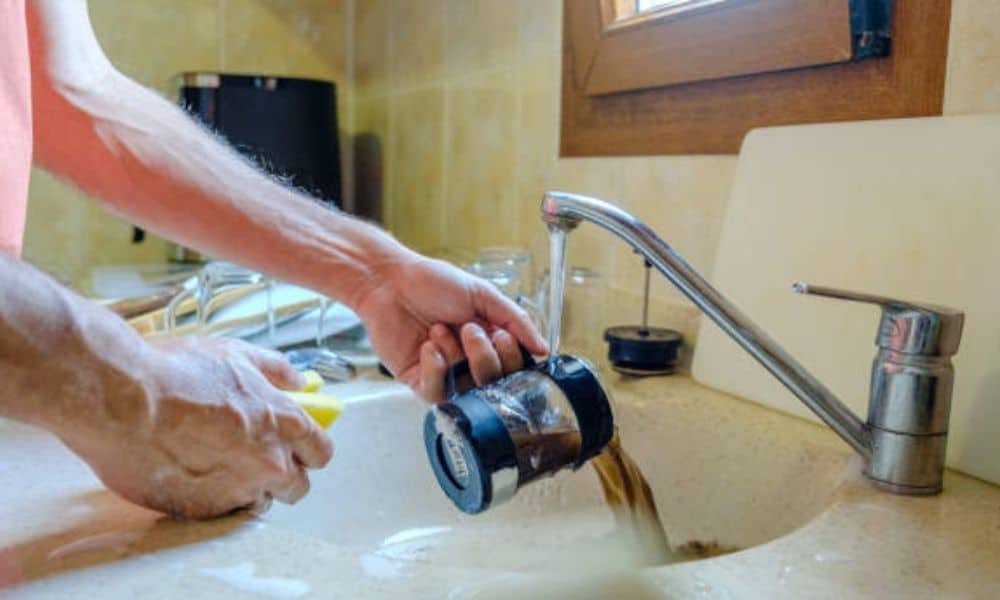
Coffee should taste bold and clean—not sour or muddy. I learned that knowing how to clean a French press properly is the secret to great flavor and a longer-lasting brewer. Over time, I figured out a simple routine that removes stains, clears buildup, and keeps every cup fresh. This guide walks you through exactly what works—fast, natural, and beginner-friendly. Let’s dive in.
Why Cleaning Your French Press the Right Way Actually Matters
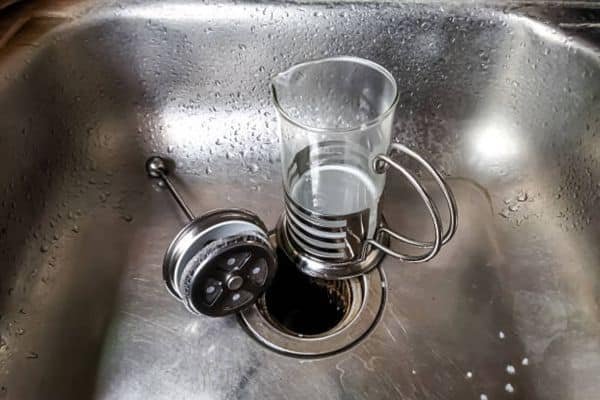
Most people don’t realize that old coffee oils stick to your French press and slowly ruin the flavor. I used to wonder why my brew tasted bitter even with fresh beans—turns out, it was the dirty mesh and stained glass. Dirty oils make coffee taste bitter.
I once left my press unwashed for two days, and when I came back, mold had started forming under the lid. The buildup was thick, and scrubbing it off was a mess. A neglected French press grows mold and buildup fast.
Back then, I’d just rinse it and move on. Big mistake. The taste got worse until I finally learned how to clean a French press properly. Cleaning it right improves the flavor instantly.
What You’ll Need Before You Start (Simple Tools You Already Have)
You don’t need fancy gear to get a clean French press—just a few basics you probably already have in your kitchen. Start with warm water, not boiling, to loosen up coffee oils without damaging the glass. I like using baking soda or vinegar for natural descaling—cheap, safe, and effective.
A soft sponge works great for the carafe, but for the filter, you’ll want a mesh-safe brush so you don’t tear the screen. I dry everything with a clean towel, though air-drying also works fine. And for deep cleaning, I sometimes grab a bottle brush to reach those tricky corners.
Step-by-Step French Press Cleaning Guide (Beginner Friendly)
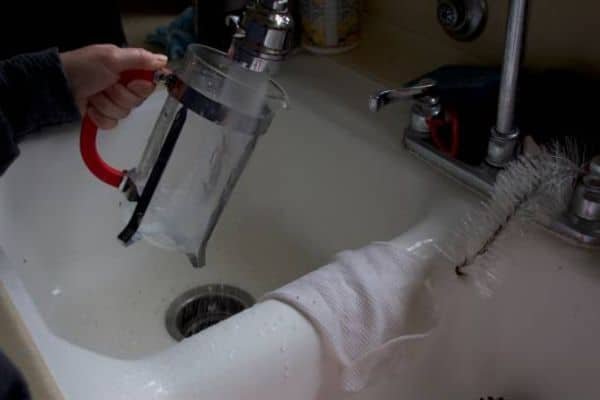
Cleaning your press doesn’t have to be complicated. This step-by-step French press cleaning guide makes it easy—even if you’re brand new to it.
Step 1 – Empty and Rinse Immediately After Brewing
Right after pouring your last cup, rinse the carafe with warm water. Letting it sit causes the oils to stick harder. Rinse your French press right after use to prevent stubborn residue.
Step 2 – Remove Grounds Without Clogging Your Sink
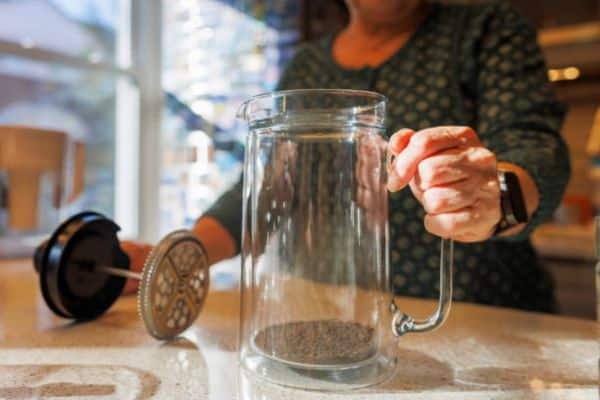
Never dump coffee grounds down the drain. I scoop them out with a spoon, then use a paper towel to wipe the bottom clean. A fine strainer over the sink works too.
Use a paper towel or strainer to dispose of coffee grounds safely.
Step 3 – Disassemble All Parts Properly
Take apart the lid, plunger, mesh layers, and cross plate. You’ll get better results when each piece gets cleaned separately. Disassembling the parts ensures every area gets cleaned.
Step 4 – Clean the French Press Mesh Filter Thoroughly
Gently scrub the mesh with a soft brush and baking soda. Avoid bending or tearing the screen—I’ve done that once and had to replace it. Use gentle tools to clean mesh filters without damage.
Step 5 – Scrub and Rinse the Carafe the Right Way
Use a soft sponge in circular motion. No harsh scrubbing pads—they can scratch the glass.
Use gentle pressure to avoid scratching the French press carafe.
Step 6 – Let It Dry Completely to Avoid Odor or Mold
I lay everything out on a towel or stand it upside down to air-dry. Just don’t store it wet—moisture is where mold starts. Dry your French press fully to prevent odor and mold.
Best Way to Deep Clean a French Press (Weekly Method)
Even with daily rinses, grime builds up—especially in the mesh. That’s why I do a deep clean once a week. It only takes 10 minutes, and the difference is huge. The best way to deep clean a French press is with natural ingredients like baking soda or vinegar.
I soak all the parts in warm water mixed with vinegar or baking soda. Then I scrub the plunger assembly carefully to get rid of hidden gunk. A weekly deep clean keeps your press fresh and functioning like new.
How to Remove Coffee Stains from a French Press (My Proven Fix)
Coffee stains build up fast—especially in glass presses. I’ve tested everything, and here’s what actually works. For light stains, I use a gentle abrasion method with a soft sponge and warm water. Gentle scrubbing removes surface stains without damaging your press.
For deeper stains, I make a quick baking soda paste, rub it in, let it sit for five minutes, then rinse. Works like magic.
A baking soda paste lifts stubborn coffee stains from your French press.
If that doesn’t do it, I soak the press in warm vinegar for 10–15 minutes. It works better for old, sticky discoloration. Just don’t use vinegar on stoneware. Vinegar is better for deep-set stains, especially in stainless steel models.
How to Descale a French Press Naturally (Safe for Glass & Steel)
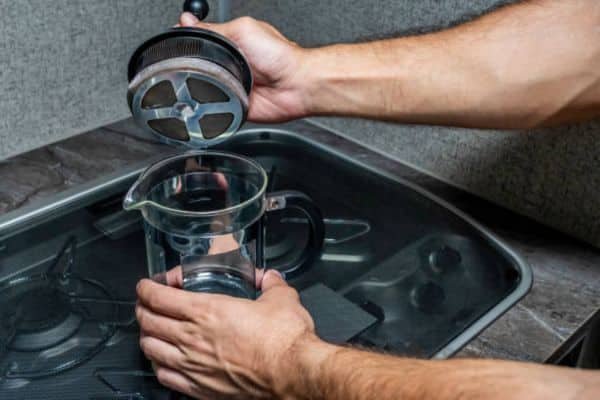
Over time, mineral deposits build up—especially if you use hard water. I descale mine monthly using a simple method. The best way to descale a French press naturally is with vinegar or lemon water.
I fill the carafe with 1 part vinegar and 2 parts warm water, let it sit for 15 minutes, then scrub gently. For a milder option, lemon juice and hot water also work. Lemon and vinegar both dissolve mineral buildup without damaging your press.
Natural descaling keeps your coffee tasting fresh—and it’s safer for your health and the environment. Natural descaling avoids harsh chemicals and keeps your coffee pure.
I usually descale every 3–4 weeks, depending on how often I brew. It’s quick, easy, and makes a big difference. Descaling once a month helps prevent clogs and keeps your press in top shape.
French Press Cleaning Without Soap (For a Cleaner, Pure Taste)
Some coffee lovers avoid soap altogether—and I get it. Soap can leave behind residue that affects flavor. I switched to soap-free cleaning using baking soda and vinegar, and my coffee actually tasted cleaner. Cleaning your French press without soap can improve taste clarity.
For daily use, I just rinse with warm water and scrub with a sponge. Once a week, I deep clean with natural methods. Soap-free cleaning works best when paired with regular deep cleaning.
How to Prevent Buildup in Your French Press (Simple Daily Habits)
Buildup starts small—but once it sets in, it’s tough to clean. I’ve learned a few easy habits that stop it before it starts. The best way to prevent buildup in a French press is with daily rinsing and weekly deep cleaning.
Each morning, I rinse my press with warm water and give it a quick wipe with a soft sponge. I also disassemble it fully after every brew—especially the mesh filter. Taking your French press apart after each use prevents hidden grime.
Once a week, I do a deeper clean. And here’s an underrated tip: use the right coffee grind. Too fine, and it clogs the screen and sticks to the edges. Using coarse grind coffee helps reduce residue and prevents clogging.
This routine keeps my press stain-free, fresh-smelling, and ready for the next brew.
Common Mistakes People Make When Cleaning a French Press
I’ve made all of these—and learned the hard way. The worst? Pouring boiling water into the press right after brewing. It cracked my first one. Boiling water can damage your French press. Always let it cool slightly.
Another mistake: forgetting to clean the filter layers. That gunk builds up fast and turns bitter. Neglecting the mesh filter traps oils and ruins flavor.
Using abrasive tools is a no-go too. I once scratched the glass so badly, it always looked cloudy. Scrubbing with harsh tools damages the carafe permanently.
And storing it wet? That invites mold. Now I always dry mine fully before putting it away. Letting moisture sit inside your French press can cause mold.
My Personal French Press Maintenance Routine (What I Do Daily, Weekly, Monthly)
Over the years, I’ve nailed a routine that works. It keeps my press clean and my coffee fresh.
- Daily: rinse and dry with a towel
- Weekly: full deep clean with baking soda
- Monthly: descale with vinegar or lemon water
Following a daily, weekly, and monthly routine keeps your French press in perfect condition.
This rhythm helps me avoid buildup, bad flavors, and surprise mold. It’s simple, takes minutes, and makes every brew taste better. A little consistency goes a long way in keeping your French press like new.
Final Thoughts
No fancy gear or special cleaners—just simple habits, done consistently. That’s what transformed my morning coffee. Once I learned how to clean my French press properly, the bitterness disappeared, the flavor popped, and my press stayed looking brand new.
Cleaning your press isn’t a chore—it’s part of the ritual. Like grinding fresh beans or waiting for the bloom, it’s one more step that shows respect for your brew.
Just remember: rinse daily, deep clean weekly, and descale monthly. Your taste buds will notice the difference. Your press will thank you too.
